📌 Disclaimer
Prices, schedules, tour details, flight routes, visa requirements, and all other information on this page are based on data at the time of writing. Fares, availability, and policies may change. Please verify current details on the official website before booking.
South Korea Visa Policy Overview#
The government of South Korea enforces distinct entry frameworks for foreign nationals arriving from around the globe. Travelers fall into several categories depending on their country of citizenship, ranging from short-term visa exemptions to mandatory electronic travel authorizations and standard entry permits. A total of 198 nationalities are accounted for within these systems. Certain foreign nationals may enter the country without securing a pre-arranged document for stays lasting up to 180 days, 90 days, or 30 days. Other passport holders must obtain an electronic travel authorization or an electronic permit before departure. Understanding these official policies ensures that visitors comply with immigration laws upon arrival at South Korean ports of entry.
Visa-Free and Visa-on-Arrival Access#
Citizens of specific nations enjoy visa-free entry to South Korea for designated periods. These exemptions are categorized by the maximum allowed duration of stay.

For stays of up to 180 days, the policy applies exclusively to passport holders from Canada.
For stays of up to 90 days, visa-free access is granted to nationals from Australia, Austria, Belgium, Bulgaria, Colombia, Croatia, Czech Republic, Denmark, Estonia, Finland, France, Germany, Greece, Hong Kong, Hungary, Iceland, Ireland, Israel, Italy, Japan, Latvia, Liechtenstein, Lithuania, Luxembourg, Macao, Malta, Netherlands, New Zealand, Norway, Poland, Portugal, Qatar, Romania, Singapore, Slovakia, Slovenia, Spain, Sweden, Switzerland, Taiwan, United Arab Emirates , United Kingdom, and the United States.
For stays of up to 30 days, visa-free entry is available to citizens of Bahrain, Brunei, Cyprus, Fiji, Kiribati, Kuwait, Marshall Islands, Micronesia, Monaco, Nauru, Oman, Palau, Samoa, San Marino, Saudi Arabia, Tonga, Tuvalu, and the Vatican. Travelers utilizing these visa-free pathways must still meet standard border control criteria, including holding a valid passport and return travel documentation.
e-Visa and ETA Options#
Travelers who do not qualify for complete visa-free entry may be eligible for electronic authorizations or digital permits. The Electronic Travel Authorization (ETA) system applies to 48 nationalities. Citizens requiring an ETA must complete the online application prior to boarding their flight to South Korea. The eligible countries for the ETA framework include Albania, Andorra, Antigua and Barbuda , Argentina, Bahamas, Barbados, Bosnia and Herzegovina , Botswana, Brazil, Chile, Costa Rica, Dominica, Dominican Republic , Ecuador, El Salvador, Grenada, Guatemala, Guyana, Haiti, Honduras, Jamaica, Kazakhstan, Lesotho, Malaysia, Mauritius, Mexico, Montenegro, Morocco, Nicaragua, Panama, Paraguay, Peru, Russia, Saint Kitts and Nevis , Saint Lucia, Saint Vincent and the Grenadines , Serbia, Seychelles, Solomon Islands, South Africa, Suriname, Swaziland, Thailand, Trinidad and Tobago , Tunisia, Turkey, Uruguay, and Venezuela.

Additionally, an e-visa option is designated for an extensive list of 88 nationalities. Foreign nationals falling under the e-visa category must secure their electronic permit before initiating travel. The countries included in the e-visa policy are Afghanistan, Algeria, Angola, Armenia, Azerbaijan, Bangladesh, Belarus, Belize, Benin, Bhutan, Bolivia, Burkina Faso, Burundi, Cambodia, Cameroon, Cape Verde, Central African Republic , Chad, China, Comoros, Congo, Cuba, DR Congo, Djibouti, Egypt, Equatorial Guinea , Eritrea, Ethiopia, Gabon, Gambia, Georgia, Ghana, Guinea, Guinea-Bissau, India, Indonesia, Iran, Iraq, Ivory Coast, Jordan, Kenya, Kosovo, Kyrgyzstan, Laos, Lebanon, Liberia, Libya, Madagascar, Malawi, Maldives, Mali, Mauritania, Moldova, Mongolia, Mozambique, Myanmar, Namibia, Nepal, Niger, Nigeria, North Korea, North Macedonia, Pakistan, Palestine, Papua New Guinea, Philippines, Rwanda, Sao Tome and Principe , Senegal, Sierra Leone, Somalia, South Sudan, Sri Lanka, Sudan, Syria, Tajikistan, Tanzania, Timor-Leste, Togo, Turkmenistan, Uganda, Ukraine, Uzbekistan, Vanuatu, Vietnam, Yemen, Zambia, and Zimbabwe.
Entry Requirements and Practical Tips#
All individuals arriving in South Korea must present a valid passport that satisfies the validity period dictated by immigration authorities. Border officials examine travel documents, verify the purpose of the visit, and check for appropriate return or onward tickets. Travelers utilizing visa-free entries, the ETA system, or the e-visa process should carry printed or digital copies of their authorizations and confirmations to present upon request at the port of entry. It remains the responsibility of every passenger to verify their specific entry classification before booking travel arrangements, as immigration policies and processing requirements are subject to official regulatory updates.

📌 Disclaimer
Prices, schedules, tour details, flight routes, visa requirements, and all other information on this page are based on data at the time of writing. Fares, availability, and policies may change. Please verify current details on the official website before booking.
Top Tours & Activities
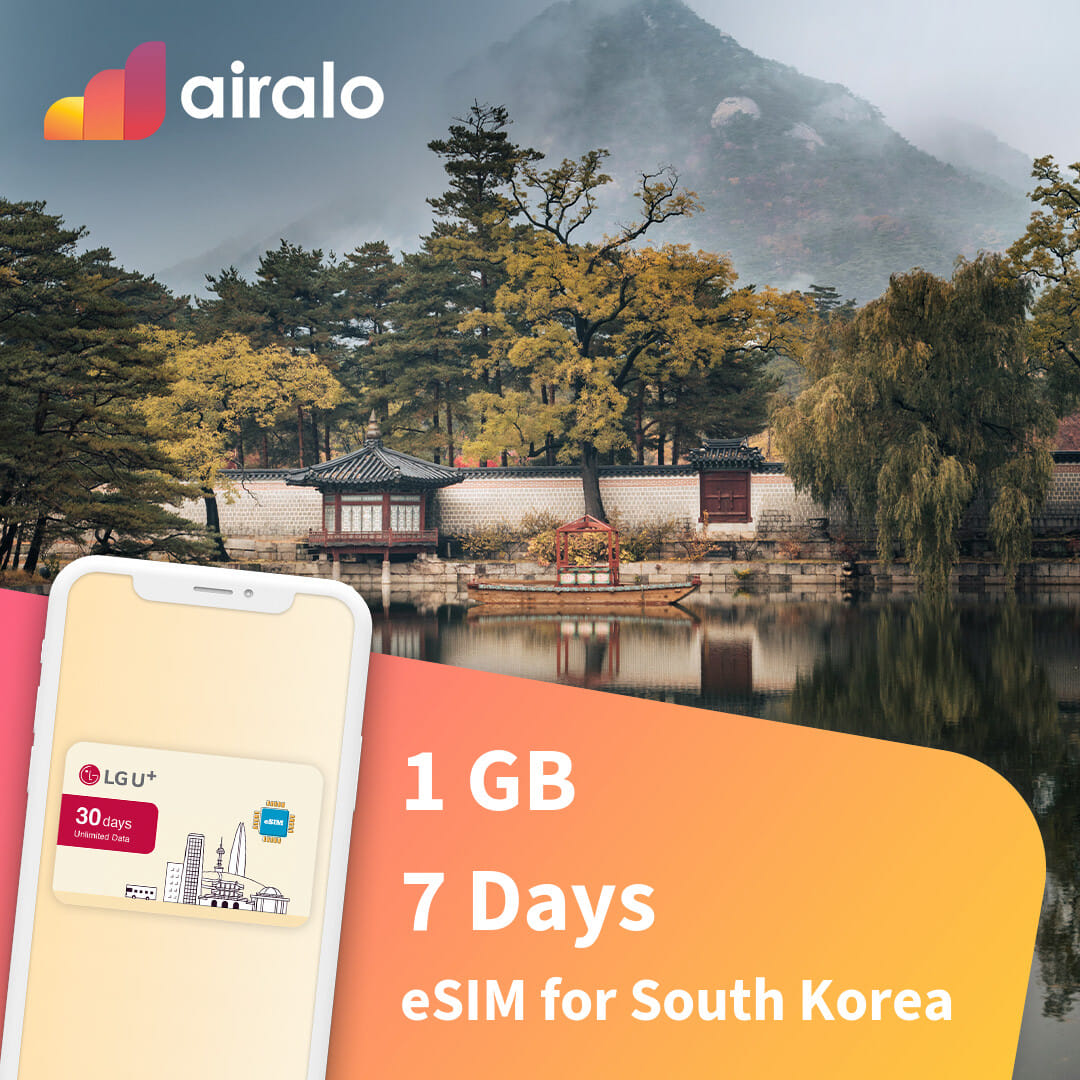
South Korea eSIM - 1 GB South Korea travel eSIM valid for 7 days
eSIM
From $4

K-Culture Adventure in Seoul Self-Guided Walking Tour
Audio Guides
From $1
📌 More about South Korea
📌 More about South Korea